Set up a new hive, and learn why this one died this month with the LBA.

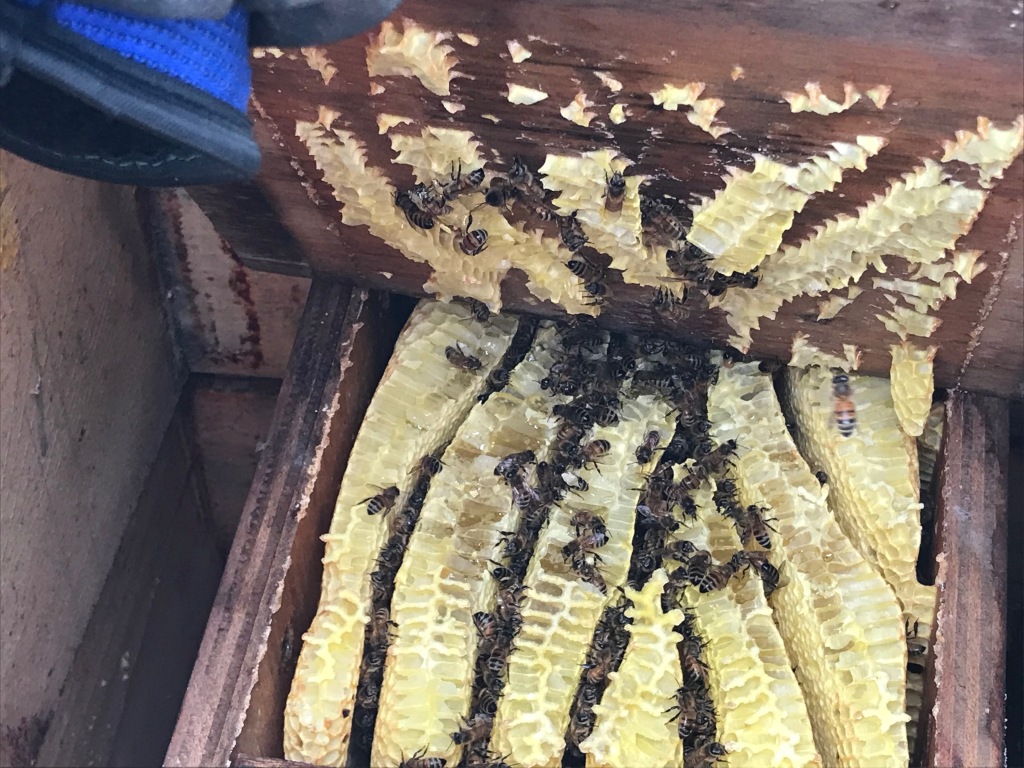
These bees looked to be healthy, other than being dead. Find out what happened at the next meeting of the Leatherstocking Beekeepers’ Association.

This month learn all about setting up that first hive, featuring a hands on demonstration on installing packages and nuclues colonies with Richard Lercari.

Then Steve Davis will present on his Dead Out inspection at an LBA members bee yard. Learn about the difficulties bees face going into winter, the hazards of the transition between winter and spring, and what we can do as beekeepers to help.

Annual dues are also due by the end of the month. $10 for an individual or $15 for a family. Attend the monthly meeting, get access to the clubs honey extractor, and learn from experienced local beekeepers.

Members who attend this meeting will be entered to win a nucleus colony from Kutick’s Everything Bees to get started with this Spring.

In other business we will also be holding our elections for club officers, including the office of the president. So bee there or bee square. 

The monthly meeting of the Leatherstocking Beekeepers’ Association will be held Thursday, March 28 at 7 p.m. at The Farmers’ Museum in Cooperstown.

Bee Prepared… for winter

Our bees have worked hard all summer long and now the time of cold is almost upon them. Learn how we as beekeepers can help our girls to survive the winter ahead with the Leatherstocking Beekeepers’ Association.

The first presentation will be “Getting hives ready as they head into winter” with Richard Lercari discussing the physical prep of the hive for the cold months ahead. Following will be a cautionary commentary on (expired) bee treatments for both the beekeeper and the bees with Richard Burroughs.

Club president Mike Lyons will then host “Responsible beekeeping practices” an open forum about the LBA mission.

All are welcome to visit, learn, and get bee questions answered.

The Leatherstocking Beekeepers’ Association will be meeting Thursday, October 26 at 7 p.m. at The Farmers’ Museum, Cooperstown.

The Birds and the Bees

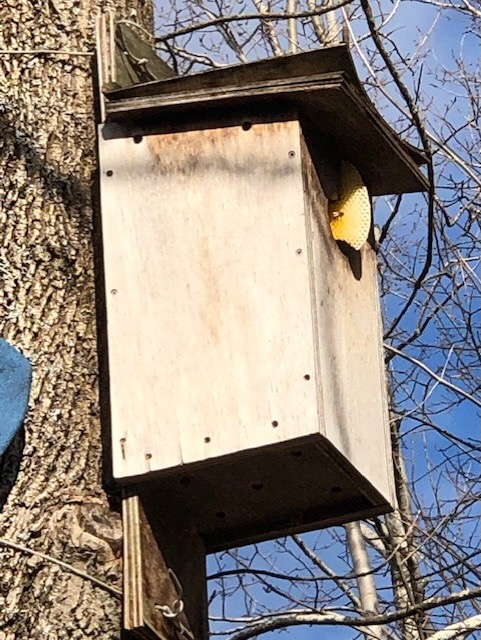
We had a late season discovery in the orchard. Our owl’s nesting box had a nice fan of honeycomb oozing out the front entrance hole. Concerned that a colony in the small exposed box would have a tough time surviving the winter we did some ladder and rope work to lower the box intact and place it into a Langstroth hive body.  It’s generally advised that you shouldn’t  move a hive “more than 3 feet or less than 3 miles”.  We had to move the hive about 30 yards to the apiary so on the advice of another LBA member we placed some limbs at the new hive entrance.  Now the foragers would have to slow down, take a look around and reorient to their new location before they took off.

Two months later,  on a warm Dec. day while adding some leftover honey frames I inadvertently yanked the top off the nesting box and found it was packed full of comb, honey and lots of bees.  The initial transfer seems to have worked well.  So far, so good.   We’ll see the results this spring.