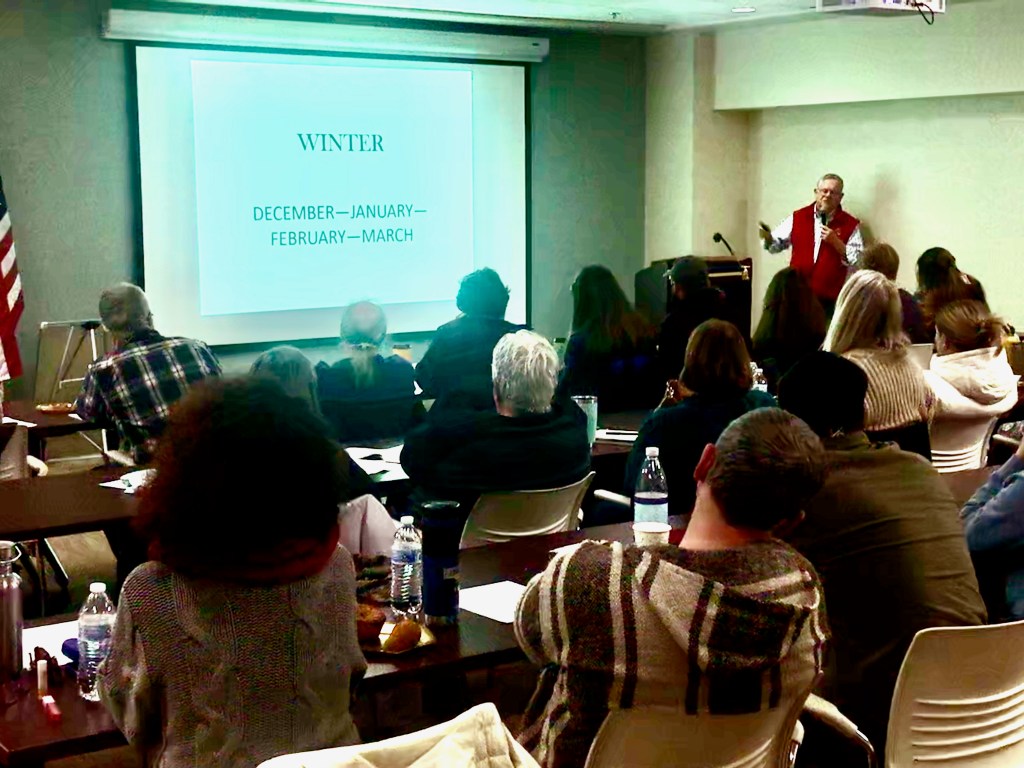
The Clark Sports Center was the setting for this years Introduction to Beekeeping on February 25.
Dave E. explains a typical beekeeper’s year to 37 potential apiarists. Joined by many other volunteer LBA members, the club continues to share the message of the honeybees’ importance in Nature and how concerned citizens can contribute to their survival and well being.
We had a late season discovery in the orchard. Our owl’s nesting box had a nice fan of honeycomb oozing out the front entrance hole. Concerned that a colony in the small exposed box would have a tough time surviving the winter we did some ladder and rope work to lower the box intact and place it into a Langstroth hive body. It’s generally advised that you shouldn’t move a hive “more than 3 feet or less than 3 miles”. We had to move the hive about 30 yards to the apiary so on the advice of another LBA member we placed some limbs at the new hive entrance. Now the foragers would have to slow down, take a look around and reorient to their new location before they took off.
Two months later, on a warm Dec. day while adding some leftover honey frames I inadvertently yanked the top off the nesting box and found it was packed full of comb, honey and lots of bees. The initial transfer seems to have worked well. So far, so good. We’ll see the results this spring.
at the Farmer’s Museum in Cooperstown from 7:00pm to 9:00pm
This has been an exciting year for beekeepers in New York. Many new faces joined the Introduction to Beekeeping Course held in February, we’ve had a hands-on training for newbees and we have had some updates to the officers and education committee.